
Preventative Neurotoxins: How Soon Should You Start?

Ever wonder how soon you should start tox? Most people wait until their wrinkles have already set in, but by then, those lines are much harder to soften. A preventative approach works differently: instead of treating wrinkles after they appear, it relaxes the muscle movements that cause them, so those lines take much longer to form in the first place.
Of course, not everyone who notices a line needs treatment, and that's an honest part of the conversation too. Here's what a preventative approach actually means, who tends to be a good fit, and who may want to wait.
What “Preventative” Tox Actually Means
It helps to know the difference between two kinds of lines.
Dynamic lines appear when you make an expression, frowning, squinting, raising your brows, and disappear when your face relaxes.
Static lines stay visible even when your face is completely at rest.
Over years of repeated movement, dynamic lines gradually etch into the skin and become static. That transition is what we're trying to get ahead of. Neurotoxins work by temporarily and precisely relaxing the specific muscles behind those repeated contractions, so the skin above has a chance to stay smoother for longer. The goal isn't to freeze your face, it's to slow the etching process so deep, at-rest wrinkles take much longer to form.
This is also why neurotoxins are far more effective on dynamic lines than on deep static ones. Once a line is etched in at rest, relaxing the muscle softens it but can't fully erase it, which is exactly why starting before that point matters.
Why Starting Tox Early Can Pay Off
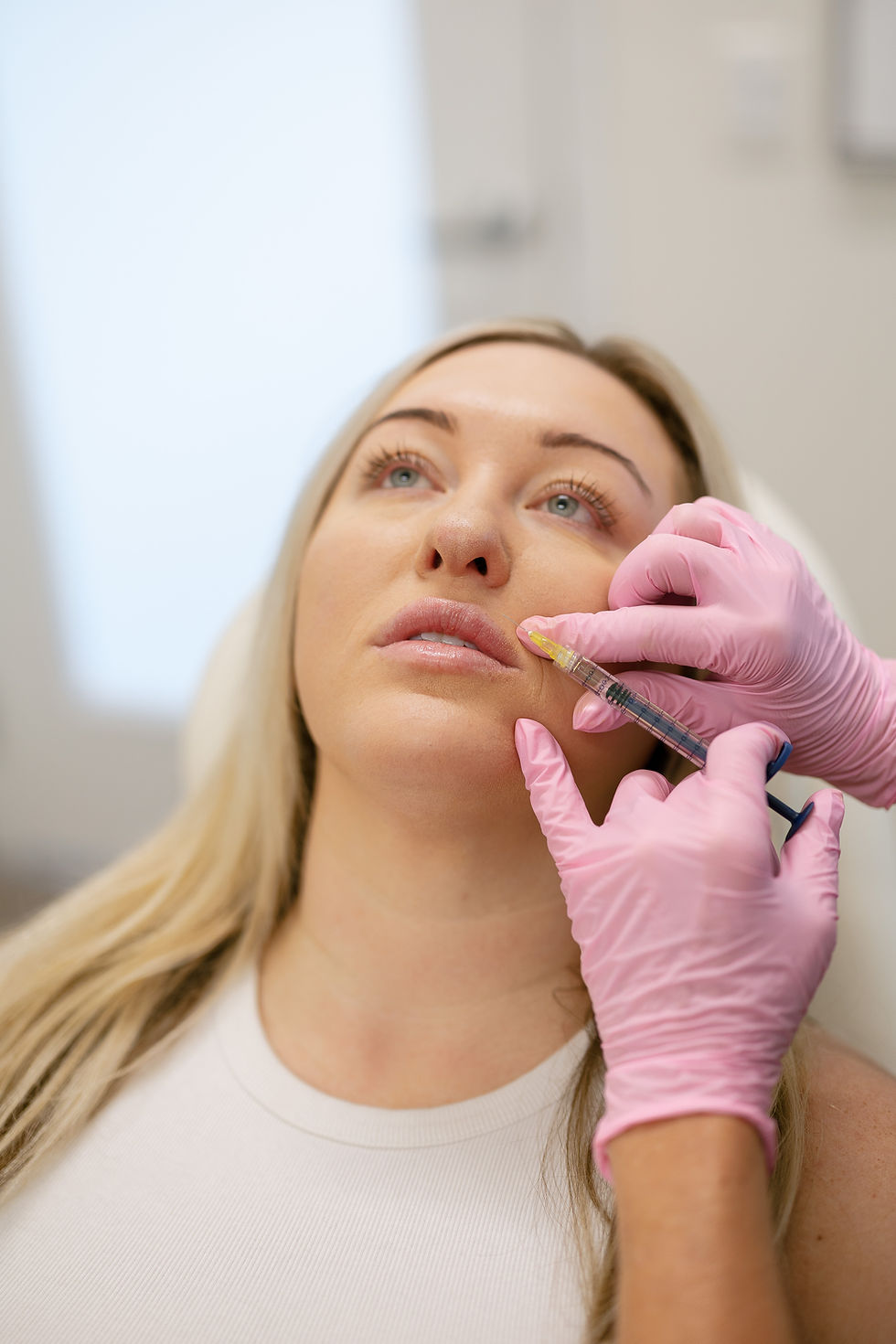
It comes down to a simple idea, it's easier to prevent a crease than to reverse one.
Smoother for longer: When treatment begins while lines are still dynamic, the muscles contract less forcefully over time, delaying the day those lines become permanent.
Often less product: Patients who start early tend to need smaller, less frequent doses than someone correcting deeply set wrinkles later, which usually take more product and more sessions.
Subtle by design: You won't see a dramatic before-and-after, and that's the point. Results are natural, your expressions stay intact, and the benefit shows up over years rather than overnight.
When Should You Start?
There's no magic age, and you should be wary of anyone who gives you a hard number. Many patients begin somewhere in their mid-20s to early 30s, when collagen production starts to slow and those first expression lines begin lingering a little longer. But what your skin is doing matters more than your birthday.
You may be at a good starting point if you notice:
Fine lines from frowning, squinting, or raising your brows that take a beat to fully relax
Faint "11s" between your eyebrows that appear with expression
Early forehead creases or crow's feet when you smile or squint
If you're younger and don't see any lines forming yet, it's completely reasonable to wait, and a good injector will tell you so honestly. Starting later still works, too. The approach just shifts from purely preventative toward a mix of correction and maintenance.
Who’s A Good Candidate?
You may be a good fit for a preventative approach if you:
Have dynamic lines that appear with expression but smooth out at rest
Are in good general health
Want a subtle, natural result while keeping your full range of expression
Understand results are temporary and require maintenance
Want a minimally invasive option with little to no downtime
Who Should Wait for Tox?
Knowing when neurotoxins aren't the right choice matters just as much. This isn't a complete list, it's exactly what we review during a consultation, but treatment is generally not recommended if you:
Are pregnant or breastfeeding. Safety hasn't been established, so the guidance is to wait.
Have a known allergy or sensitivity to botulinum toxin or a product's ingredients.
Have certain neuromuscular conditions, such as myasthenia gravis or Lambert-Eaton syndrome, which can increase sensitivity to treatment.
Have an active skin infection, cold sore, or open wound in the area to be treated.
Take certain medications, like specific antibiotics or muscle relaxants, that can amplify the effects.
If any of these apply, it doesn't necessarily mean neurotoxins are off the table forever, often it just means the timing isn't right. Contact us for a consultation to see whether tox is a good fit.
Ready to Get Started?
If you've been curious whether a preventative approach makes sense for you, the best first step is a conversation. Every patient is different, your skin, your history, your expressions, and your goals all matter, and there's no one-size-fits-all plan. We'll take an honest look at your skin and build a plan that fits where you actually are. If now isn't the right time, we'll tell you that, too.
If you want more information about what we do at Tighten It Spa, check our services page, or reach out. You can text us at 916-792-0772 with any questions. We’re proud to serve the greater Sacramento area, with two Roseville locations, Fountains and Village Westpark.
Check out our socials for more information as well.

Comments